

PDF Reader: View All PDFs
Lumio Tech
I spent time with PDF Reader: View All PDFs as a practical tool rather than treating it like a simple file viewer. Its main appeal is straightforward: it brings reading, editing, and conversion into one Android app. That combination can be useful when I need to check a document quickly, make a small change, or prepare a file for another device without opening several separate tools.
It is developed by Lumio Tech and sits in the tools category. The app is free to install, carries an Everyone age rating, and has passed the one-million-install mark. Its average rating is 3.3 from around 6,800 ratings, which tells me that the experience is useful for many people but not consistently smooth for everyone. That middle-ground reputation feels important here: this is a convenient general-purpose reader, not a complete replacement for a dedicated document editor or a carefully designed accessibility suite.
My overall impression is that PDF Reader: View All PDFs works best when convenience matters more than advanced control. I would recommend trying it if you regularly receive PDFs on an Android phone and want basic tools close at hand. I would be more cautious if you depend on precise layout editing, specialist accessibility support, or a completely free workflow with no upgrade pressure.
Readable documents and less frustrating navigation
The first thing I look for in a PDF app is whether I can get from a downloaded file to the page I need without unnecessary effort. A reader that technically opens PDFs but makes browsing awkward quickly becomes a burden. Here, the usefulness comes from having a focused place for PDF files instead of relying on a browser preview or a general file manager every time.
For ordinary reading, the app is most suitable for documents such as forms, instructions, receipts, school handouts, travel confirmations, and work attachments. I can imagine opening a file during a commute, checking a page, and returning to another task without needing a desktop computer. The value is not dramatic, but it is practical: a dedicated reader makes PDFs feel like documents I can handle rather than files I can only inspect.
Latest News

Uber Eats Under Pressure: What Happens When Delivery Goes Wrong

How QR & Barcode Scanner Adapts to Android and iOS Innovations

Why Waze Navigation & Live Traffic Is Your Essential Travel Companion
CapCut Mastery: Unleash Hidden Features for Pro-Level Editing

How OS Updates Enhance Roblox Adventures

Teacher Simulator: Exam Time Turns Quick Classroom Judgments into a Repetitive Loop
Navigation quality matters especially when a document is longer than a few pages. On a phone, constant zooming and dragging can make reading tiring, even when the PDF itself is well designed. I found that the experience depends heavily on the original document. Text-based PDFs are naturally easier to read than scans, crowded forms, or pages designed for a large monitor. That is worth remembering before blaming the app for every difficult page.
One useful habit is to decide whether I am reading for understanding or searching for a single detail. For a full read, I prefer a stable zoom level and a slow page-by-page rhythm. For reference work, I keep the document open only long enough to locate the relevant section, then use the editing or conversion tools if the file needs to move into another workflow. Treating the app as both a reader and a handoff point makes more sense than expecting it to behave like a full desktop publishing program.
Why the simple reader can still be valuable
PDF Reader: View All PDFs is particularly handy for people who receive documents through messaging apps, email, cloud storage, or downloads. Instead of switching between several viewers, I can use one tool as the place where I inspect the file first. That can reduce friction for users who are not comfortable choosing between different document apps.
Gallery
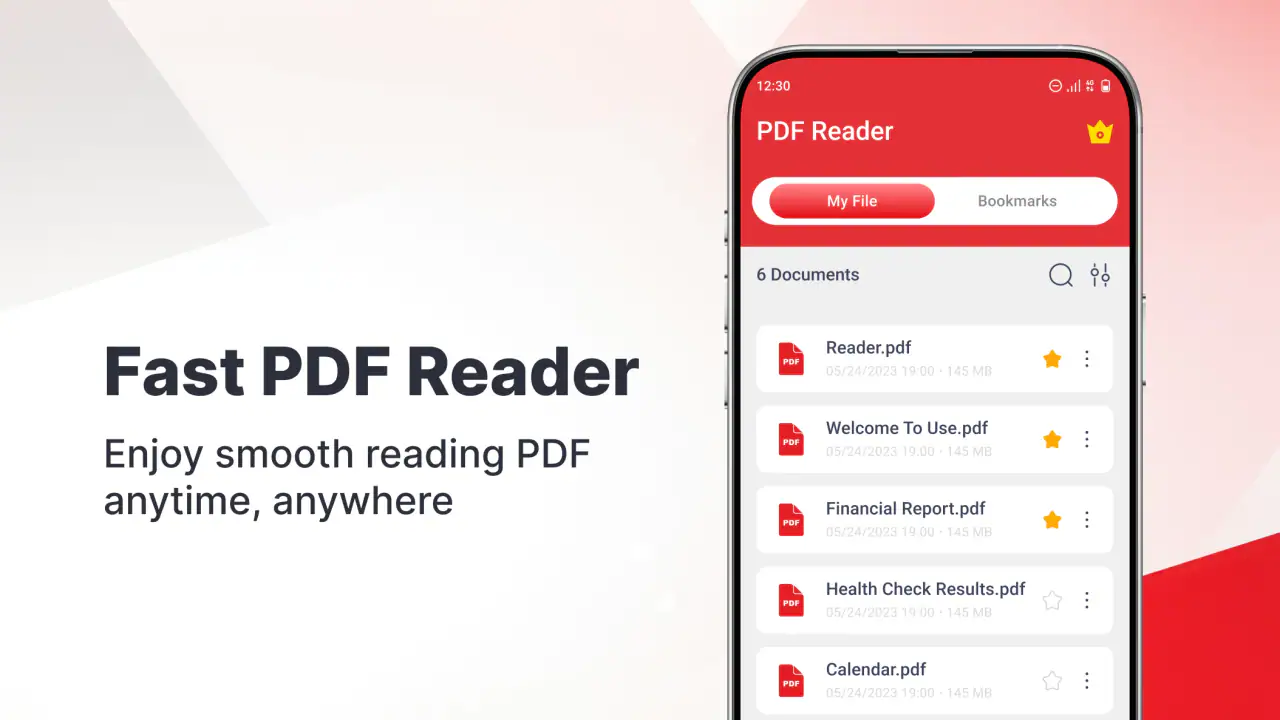
It also suits occasional users better than someone who manages PDFs professionally every day. If I only need to read a rental form, review a school document, or check a manual, a broad set of professional features may be unnecessary. The app’s appeal is its straightforward role: open the file, understand what is on the page, make a modest adjustment when needed, and convert it if the next step requires another format.
However, I would not choose it solely because the word “reader” sounds comprehensive. A PDF can contain selectable text, scanned images, embedded forms, unusual fonts, or complex page elements. Those behave differently. Anyone handling important paperwork should inspect the result after editing or converting, especially when spacing, signatures, tables, or small print matter.
Motor and sensory considerations in everyday use
Phone-based document work always creates physical trade-offs. Tapping small controls, dragging a zoomed page, and holding a device for several minutes can be difficult for people with limited dexterity, tremor, fatigue, or one-handed use needs. I would approach this app with realistic expectations: its usefulness depends not only on what the software can do, but also on the screen size, system settings, and the complexity of the PDF.
A larger phone or tablet can make a noticeable difference because the page does not need to be enlarged and repositioned as often. I would also use the device’s own display settings, such as larger text or increased contrast where available, while remembering that those settings may not change text embedded inside a PDF page. A document that is actually a scanned image will remain visually fixed, so system text enlargement may offer little help.
For users with visual fatigue, short sessions are more manageable than trying to review a long document in one sitting. I find it useful to rotate the device when a page contains a wide table, then return to portrait orientation for ordinary text. This is a small adjustment, but it can reduce repeated pinching and dragging. It also highlights an important limitation: the app can present a PDF, yet it cannot automatically redesign every document for comfortable mobile reading.
People who rely on screen readers should pay attention to the document itself. A properly structured PDF may be easier for assistive technology to interpret, while a scan or poorly tagged file may not behave like ordinary selectable text. I would not assume that opening a PDF in this app guarantees a fully accessible reading experience. The safer approach is to test one representative document before depending on it for study, work, or essential services.
A realistic scenario: handling a document away from a computer
Imagine receiving a multi-page application form while standing in a queue. I would open it in the app to confirm that it is the correct version, read the instructions, and decide whether I need to edit or convert it. If the task is only to understand the requirements, the reader may be enough. If I need to send the content into another workflow, the conversion option could save time compared with finding a separate utility.
The important detail is verification. After any change or conversion, I would reopen the result and check the first page, the last page, fields, tables, and any small text. A file can appear fine at a glance while losing alignment or changing how content flows. This check is especially important for official forms, invoices, applications, and documents that another person must print.
For someone with motor limitations, this scenario may still involve too much precise tapping on a small screen. In that case, a tablet, a keyboard-connected device, or a computer-based editor may be a better choice. The app can reduce the number of tools involved, but it cannot remove the physical demands of mobile document handling.
Situational access: where the app fits best
The app makes the most sense in situations where I need immediate access rather than a polished production workflow. A student can review a reading packet between classes. A traveler can inspect a booking document without carrying a laptop. A small-business owner can check a supplier PDF and prepare a copy for another system. A family member can open a form sent through a chat application and understand what information is required.
It is also useful when the original file arrives in an inconvenient place. Many people do not organize documents perfectly; files end up in downloads, attachments, or app-specific folders. A dedicated PDF tool gives me a clearer starting point than trying to remember which application originally received the file.
Conversion is valuable when the PDF is only one step in a longer process. For example, I might need to extract content into an editable document, share a more compatible version, or prepare material for another app. Still, conversion should be treated as a convenience rather than a promise of perfect preservation. Complex layouts, columns, images, and forms are exactly where I would slow down and inspect the output.
The free entry price makes experimentation easy, but the app includes in-app purchases ranging from $9.99 to $49.99 per item. That changes how I evaluate it. I can try the basic experience without paying upfront, but I would check which tools are available before building an important workflow around it. A free download is not the same as a fully free document solution.
Editing is useful, but precision has limits
Having editing and conversion alongside viewing is the app’s strongest practical idea. When I notice a small correction or need to prepare a file for a different destination, staying in the same app is more convenient than exporting, switching tools, and finding the document again. This is especially helpful for occasional users who do not want to learn several interfaces.
At the same time, PDF editing can mean very different things. Adding a note, changing visible content, rearranging a page, and reconstructing a document are not equally simple tasks. I would use this app for modest adjustments and routine preparation, but I would not assume it can replace a specialist editor for contracts, design-heavy reports, or documents where exact typography is critical.
My practical tip is to keep the original file untouched. Create a working copy before editing, then compare the edited version with the original rather than trusting memory. This is a small workflow improvement, but it protects against accidental changes and makes it easier to recover if a conversion does not preserve the layout.
Remaining barriers and points of friction
The 3.3 average rating suggests that the app will not be equally satisfying for every user. I would interpret that as a reason to test it with the documents I actually handle, not as proof that it is either poor or excellent. PDF behavior varies so much between files that a quick trial with a real scan, a form, and a text-heavy document is more informative than a generic promise.
Another barrier is the difference between reading and managing. Someone who only wants a clean, distraction-free reader may find editing and conversion unnecessary. Someone who needs advanced annotation, detailed form handling, batch processing, or dependable professional output may find the app too limited. In both cases, a more specialized alternative could be better: a lightweight reader for simple viewing, or a dedicated desktop-grade editor for demanding work.
There is also a learning curve hidden inside convenience. Combining several functions can make an app more useful, but it can also make the interface feel busier than a single-purpose viewer. Users with cognitive fatigue or low confidence around documents may prefer a tool with fewer choices. I would introduce this app gradually: first open and read a familiar PDF, then try a copy of a non-critical file before using editing or conversion on something important.
Device context remains another limitation. A small screen, poor lighting, glare, or unstable hand position can make any mobile PDF workflow unpleasant. The app may be available on devices running Android 8.0 or later, but compatibility with the operating system does not guarantee equal comfort across every screen size or hardware setup. For long documents, I would still choose a tablet or computer when possible.
Version, cost, and who should try it
The current version is 1.1.8, and the app was released on November 12, 2025. Those details matter mainly because users should keep expectations appropriate for a relatively recent tool: I would pay attention to how it behaves with my own files and whether later updates improve the rough edges that affect navigation, editing, or conversion.
I think it is a reasonable choice for Android users who want one free starting point for opening PDFs and occasionally changing or converting them. It is also a sensible option for people who value fewer app switches and do not need advanced document production. The Everyone rating makes it broadly approachable, although age suitability does not automatically mean that every document workflow will be accessible to every person.
I would skip it if my priority were guaranteed precision, complex document reconstruction, or a completely predictable professional process. I would also hesitate if I needed a reader designed around a particular assistive technology and could not test it first. In those situations, a purpose-built alternative with clearer support for the required workflow is the safer decision.
An inclusive verdict for real-world use
After using PDF Reader: View All PDFs, I see it as a practical middle option. It does more than a basic previewer by bringing viewing, editing, and conversion together, yet it does not remove the compromises of working with PDFs on a phone. Its strongest quality is convenience; its main weakness is that convenience can be mistaken for complete control.
For readability, I would use it with text-based PDFs, sensible zoom habits, and a larger screen whenever possible. For motor and sensory needs, I would combine it with device-level display settings, shorter sessions, and careful document selection. For situational access, it can be genuinely helpful when a file arrives unexpectedly and I need to understand or prepare it without a computer.
My recommendation is to try it with ordinary, non-critical documents before relying on it for important paperwork. If it handles the PDFs you receive and the purchase boundaries suit you, Lumio Tech’s tool can simplify everyday document tasks. If your needs involve specialist accessibility, exact layout preservation, or heavy professional editing, I would choose a more dedicated solution instead. That balanced position matches my experience: useful and approachable, but best judged by the specific files and physical context in which you plan to use it.
FAQs for PDF Reader: View All PDFs
What features does PDF Reader: View All PDFs offer?
PDF Reader: View All PDFs provides a comprehensive suite of features including viewing, annotating, and editing PDFs. Users can highlight text, add comments, and fill out forms. The app also supports cloud integration, allowing you to access your documents from various devices seamlessly. It's designed for both casual and professional use.
Is PDF Reader: View All PDFs free to use?
The app offers a free version with basic features suitable for everyday use, such as viewing and simple annotations. However, for advanced functionalities like PDF editing, conversion, and cloud storage integration, a premium subscription is required. The subscription plans vary and provide additional features enhancing user experience.
Can I use PDF Reader: View All PDFs offline?
Yes, PDF Reader: View All PDFs can be used offline for reading and basic annotations. However, features like cloud syncing and online document sharing require an internet connection. The app is designed to offer flexibility in usage, ensuring you can access and edit your documents even without connectivity.
Is PDF Reader: View All PDFs secure for sensitive documents?
Security is a priority for PDF Reader: View All PDFs. The app includes password protection for documents and supports encrypted file storage. Users are encouraged to keep the app updated to benefit from the latest security features and enhancements. Always ensure sensitive files are stored securely and backed up appropriately.
What devices are compatible with PDF Reader: View All PDFs?
PDF Reader: View All PDFs is compatible with both Android and iOS devices. It supports a wide range of smartphones and tablets, ensuring a consistent experience across different screen sizes. Regular updates help maintain compatibility with the latest operating system versions, ensuring optimal performance.
Pros
- Fast and smooth PDF rendering.
- Supports multiple file formats.
- Easy navigation with bookmarks.
- Dark mode for night reading.
- Reliable offline access feature.
Cons
- Limited annotation tools.
- Ads in free version can be intrusive.
- No cloud sync option available.
- Basic search functionality.
- Occasional lag with large files.


